“When you wake up every day, you have two choices. You can either be positive or negative; an optimist or a pessimist. I choose to be an optimist. It’s all a matter of perspective.”
– Harvey Mackay
The Daily Divide: Shaping Our Educational Reality
Have you ever noticed how some days just feel… different? You might wake up with a spring in your step, ready to tackle anything, while other mornings feel like you’re slogging through quicksand before your first cup of coffee. Harvey Mackay, a titan in the business world, cuts straight to the core of this experience with a simple, profound truth: every day presents us with a fundamental choice. We can lean into optimism, or we can succumb to pessimism. And that choice, as he so succinctly puts it, is all a matter of perspective.
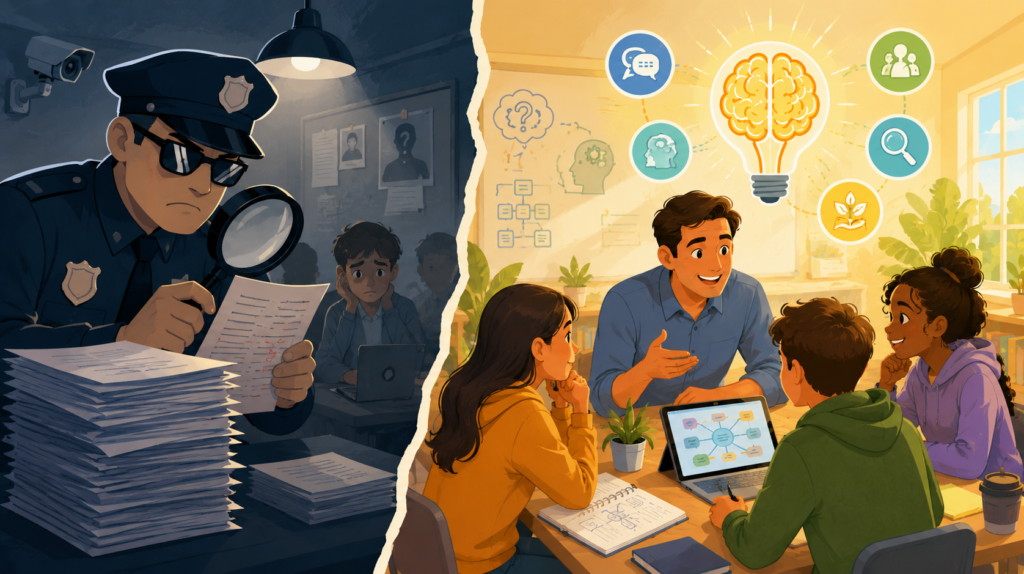
This isn’t just corporate wisdom; it’s a cornerstone of modern educational thought, deeply embedded in the very fabric of how we learn, teach, and lead. If you think about it, the core idea is simple yet incredibly powerful: each day, we choose our lens. We can wake up believing it will be a great day, approaching every interaction with positivity, support, and an unwavering belief that the glass is not just half full, but overflowing with potential. Or, we can choose the other path, dismissing ideas, predicting failure, and dragging down the energy in the room. The remarkable thing is, this choice is entirely ours, a framework we construct for ourselves and those around us.
The Educational Imperative: Growth Mindset in Action
Mackay’s philosophy on perspective directly mirrors the psychological research of Carol Dweck and the transformative power of a Growth Mindset. In the dynamic world of K-12 education, this distinction isn’t just academic; it’s the difference between a student seeing a complex algebra problem as an “impossible wall” and viewing it as a “challenge to be solved.”
The Power of Growth Mindset
- Shifting the Narrative: For students, an optimistic perspective treats failures not as indictments of intelligence, but as valuable data points for improvement. “I’m just not good at this subject” becomes “I haven’t mastered this yet, but I can learn.”
- Building Resilience: Learning is inherently full of setbacks—incorrect answers, low grades, misunderstood concepts. Mackay’s perspective cultivates resilience, teaching students that while we can’t always control the curriculum or the difficulty of a test, we absolutely can control our emotional response to them.
Teacher-Student Dynamics: A Self-Fulfilling Prophecy
The impact of this choice extends beyond individual students; it shapes the entire social ecosystem of our classrooms and schools. When an educator consciously chooses optimism, they become a powerful model. Viewing a struggling student through a positive lens—focusing on their potential rather than their current performance—often creates a “self-fulfilling prophecy” that leads to dramatically better student outcomes. We’re not just teaching content; we’re teaching character, perseverance, and the fundamental belief that effort can change ability.
- Pessimistic View (Fixed):
- “This mistake proves I’m not smart.”
- “The teacher is being too hard on me.”
- Optimistic View (Mackay’s Perspective):
- “This mistake shows me what I need to practice.”
- “The teacher is pushing me to reach my potential.”
Cultivating Your Optimistic Lens: Resolving Everyday
Take a few moments to reflect on your own experiences. When did you find yourself embodying the positive, supportive, and enthusiastic leader? Was it during a curriculum meeting, seeing opportunity where others saw obstacles? Or perhaps when you were helping a student finally grasp a difficult concept, and you felt that surge of shared triumph? Conversely, think about moments when the negative wolf took the reins. When did you dismiss an idea, or perhaps look at a student and think, “they’ll never get this”? These moments, both good and bad, are not just memories; they are lessons.
The beauty of Mackay’s insight is that it empowers us. We have the ability to choose, to frame our interactions, and to approach challenges with a growth mindset. As you prepare for the next school year, the next project, or even just the next conversation, put yourself in the right mindset. It’s about more than just being cheerful; it’s about intentionally choosing the framework through which you will engage with the world, **Resolving Everyday** issues with a proactive, hopeful spirit.
What are you going to do to ensure you’re in the right growth mindset for your next interactions? Remember, the choice is yours to be a plus or a minus. Choose wisely, and watch the world around you transform.
Now it’s your turn to make a difference: go out there and light up a mind!